

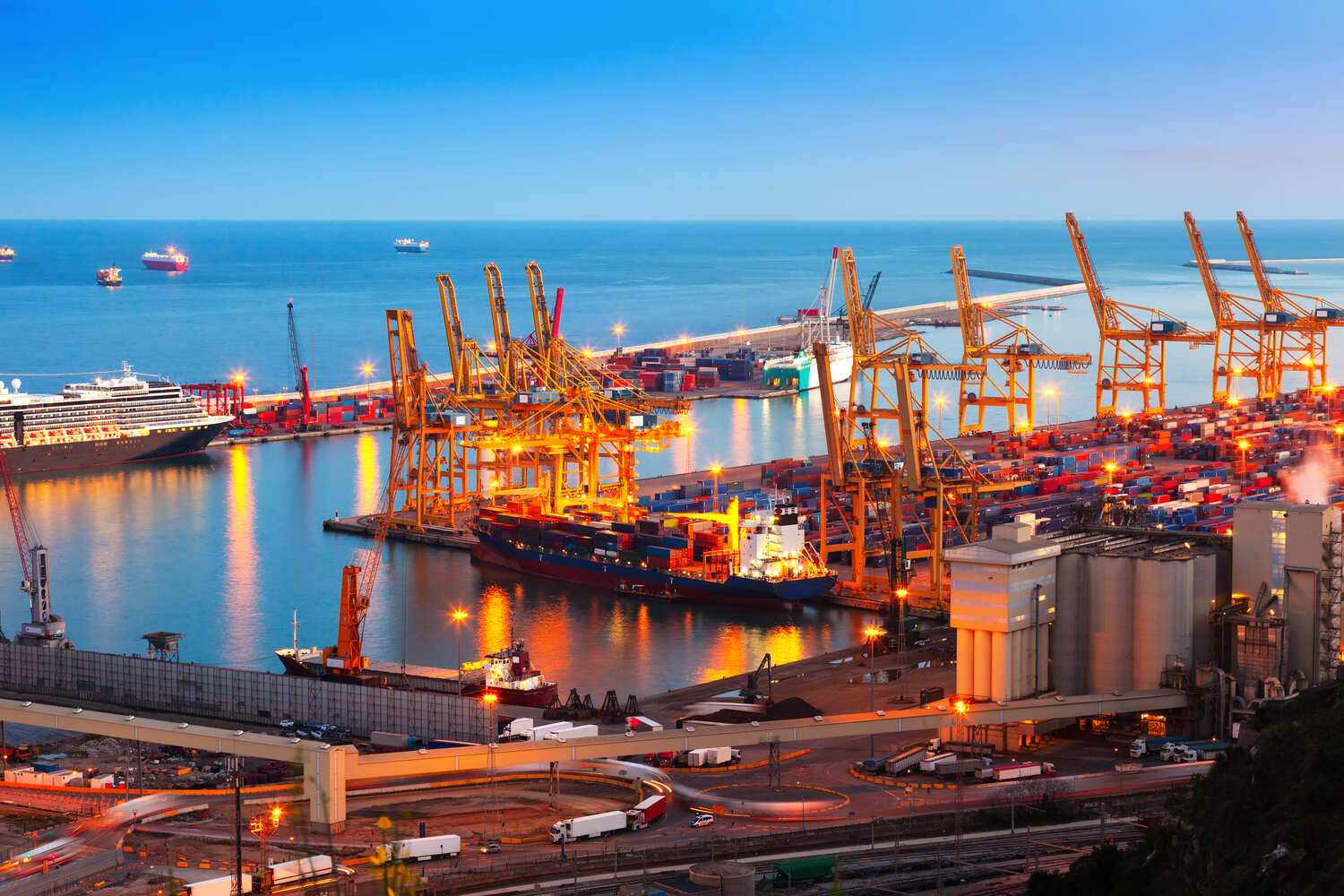
A poorly coordinated port call at the Port of Algeciras can turn a twelve-hour stop into a two-day wait. Clearance procedures with the Harbour Master (Capitanía Marítima), pilotage coordination, procurement of port services, bunkering, work permits for on-board repairs, and crew management must be executed concurrently and seamlessly.
For a shipowner or a superintendent managing a fleet in transit through the Strait of Gibraltar, understanding how a port call works in Algeciras is a direct operational advantage. This guide explains step-by-step what port call management in the Port of Algeciras entails: which services are contracted and how, which authorities are involved, what the actual timeframes are, and what makes the difference between an efficient port call and a costly one.
If you are planning a stop in Algeciras or need shore-based support, here is everything you need to know.
What Is Port Call Management and What Does It Include in a Port Like Algeciras?
Port call management is the set of administrative, logistical, and technical operations that must be coordinated from the moment a vessel announces its arrival until it leaves the port. It is not just about mooring and sailing; behind every port call, there is a chain of procedures that, if not well-coordinated, generate delays and unforeseen costs.
Services Included in a Complete Port Call
A port call at the Port of Algeciras may involve some or all of these services, depending on the vessel type and the reason for the stop:
- Harbour Master Clearance: Clearance with the Harbour Master and Customs.
- Pilotage: Coordination with the Port pilots.
- Towage and Mooring: Hiring tugboats and mooring services.
- Bunkering and Provisioning: Supply of fuel (bunkering) and water.
- MARPOL Waste: MARPOL waste management.
- On-Board Repairs: Coordination of steel fabrication and piping works, onboard mechanical repairs, and technical interventions.
- Crew Change: Crew changes and documentation management.
- Technical Provisioning: Supply of provisions and technical spare parts.
- Inspections: Management of inspections by classification societies or Port State Control (PSC).
Key Fact:
The Port of Algeciras Bay (APBA) is the leading port in Spain in terms of total traffic and one of the five largest in Europe for containers. Its operational capacity and the concentration of maritime agents make it possible to coordinate complex port calls within very tight deadlines.
Difference Between a Maritime Agency and a Naval Services Company
It is common for shipowners to confuse the role of a maritime agency with that of a naval services company like GTS Universal.
- The maritime agency is primarily responsible for port and administrative procedures: clearance, pilotage, towage, and documentation.
- The naval services company provides technical support: onboard repairs, spare parts supply, underwater inspection and diving operations, and coordination with the classification society.
In complex port calls, both entities work in parallel.
IN BRIEF:
- Port call management ranges from Harbour Master clearance to the coordination of repairs, supplies, and crew changes.
- The Port of Algeciras has all the infrastructure and agents required to manage complex port calls in reduced timeframes.
- Maritime agencies and naval services companies are complementary figures, not equivalent ones.
Authorities and Organisms Involved in an Algeciras Port Call
One of the keys to optimizing a port call is knowing in advance which organisms to interact with and in what order. In the Port of Algeciras, several authorities intervene, and their coordination determines the actual times for clearance and the start of operations.
Main Organisms
| ORGANISM | FUNCTION | STANDARD TIMEFRAME |
| Harbour Master (Capitanía Marítima) | Inward and outward clearance, safety control | 2–4 hours |
| Port Authority (APBA) | Berth allocation, port dues, permits | 1–3 hours |
| Customs (AEAT) | Cargo control, cargo and crew documentation | Variable |
| Border Health (Sanidad Exterior) | Sanitary control, especially for vessels arriving from outside the EEA | 1–2 hours |
| National Police / Borders | Crew documentation control | Simultaneous to clearance |
| Classification Society | Class surveys, certifications, supervised works | On demand |
Port State Control (PSC): What It Is and How It Affects the Port Call
Port State Control (PSC) is the inspection that Spanish maritime authorities can carry out on any foreign vessel calling at Algeciras. The objective is to verify compliance with international conventions (SOLAS, MARPOL, MLC).
A PSC inspection can significantly delay the port call if deficiencies are detected. Having the documentation and the technical status of the vessel ready before arrival is the best way to avoid surprises.
IN BRIEF:
- The Harbour Master, APBA, Customs, and Border Health are the four core organisms involved in standard clearance.
- A PSC inspection can freeze the port call: documentation must be in order prior to arrival.
- Prior coordination between the ship agent and the authorities reduces clearance times to 2–4 hours under normal conditions.
How an Efficient Port Call Is Planned and Executed: A Step-by-Step Process
The difference between a port call that lasts as planned and one that stretches over one or two days is almost always rooted in pre-planning. The most experienced operators in the Port of Algeciras follow a clear sequence that allows them to anticipate every procedure and eliminate idle time.
The Standard Process in 7 Steps
- Notice of Arrival (ETA): The master or operator communicates the estimated time of arrival at least 24–48 hours in advance. In Algeciras, this pre-notice allows for berth booking, pilotage coordination, and the activation of necessary services.
- Pre-Arrival Documentation: The documentation required by the Harbour Master, Customs, and Health authorities is prepared and sent: crew list, maritime declaration of health, dangerous goods declaration (if applicable), and valid class certificates.
- Shore-Side Service Coordination: All services are contracted and scheduled: bunkering, crew changes, mechanical services, repairs, and provisions. The more services that overlap in time, the shorter the port call.
- Arrival and Pilotage: The pilot boards the vessel at the pilot station and guides it to the assigned berth. In Algeciras, the pilotage service operates 24/7.
- Inward Clearance: The maritime agent manages the clearance with all organisms. Customs or Health inspections, if any, take place at this stage.
- Execution of Operations: All scheduled operations are carried out in parallel: loading/unloading, bunkering, repairs, electrical works, and class surveys. Coordination among the different teams during this phase is critical.
- Outward Clearance and Departure: Once operations are completed, the agent processes the outward clearance. The pilot accompanies the vessel back to open waters.
Essential Documentation for Clearance at the Port of Algeciras
Having this documentation ready before arrival eliminates the primary bottlenecks:
- Valid Class Certificates (safety, safety equipment, pollution prevention, load line).
- Updated crew list with passports and seaman’s books.
- Maritime Declaration of Health.
- Dangerous Goods Declaration (if applicable).
- Waste delivery receipt from the last port of call.
- Insurance documentation: P&I Club and civil liability insurance certificate.
IN BRIEF:
- Notifying the ETA 48 hours in advance allows for pre-coordinating all services and reducing the port call to the minimum required time.
- Executing operations in parallel (bunkering + repairs + crew change) is the most effective lever to shorten the port call.
- Incomplete documentation is the most frequent cause of clearance delays.
Frequently Asked Questions
What is vessel port call management?
Port call management is the set of administrative, logistical, and technical procedures that must be coordinated from the moment a vessel announces its arrival at a port until it sails. It includes clearance with the Harbour Master and Customs, hiring pilotage, towage, and mooring services, bunkering, water supply, MARPOL waste management, shipboard repairs, and crew changes.
How long does a port call last at the Port of Algeciras?
It depends on the type of operations planned. A transit port call for bunkering without cargo operations can be completed in 8–12 hours with proper advance coordination. Port calls involving repairs, crew changes, or surveys can extend to 24–48 hours. Planning ahead and executing services in parallel are the factors that influence duration the most.
What documents does a vessel need to call at Algeciras?
The vessel must submit valid class certificates, a crew list, a maritime declaration of health, a dangerous goods declaration if applicable, a waste certificate from the last port, and insurance documentation. The shipping agent coordinates the submission of these documents to the Harbour Master, Customs, and Border Health.
What is Port State Control and when does it occur in Algeciras?
Port State Control (PSC) is the inspection carried out by Spanish maritime authorities on foreign vessels to verify compliance with international safety and environmental conventions. In Algeciras, PSC is managed by the Directorate-General for the Merchant Marine (Dirección General de la Marina Mercante). Vessels with a history of deficiencies, high-risk flags, or advanced age have a higher probability of being inspected.
Can a port call in Algeciras be managed with 24/7 service?
Yes. Essential services at the Port of Algeciras—pilotage, towage, mooring, and bunkering—operate 24 hours a day, 365 days a year. Naval services companies like GTS Universal also provide 24/7 response for technical emergencies and urgent repairs during the port call.
What happens if the vessel arrives in Algeciras with an active breakdown?
If the vessel arrives with a breakdown affecting critical systems, the naval services company can mobilize before arrival to have equipment and materials ready at the pier or on a service boat. In cases where the breakdown prevents berthing maneuvers, a preliminary repair at anchorage can be arranged before entering the port.
Conclusion
Port call management at the Port of Algeciras is a complex process that demands simultaneous coordination among multiple parties: maritime authorities, port service providers, technical teams, and the crew itself. Doing it right minimizes the stop; doing it wrong can triple or quadruple the downtime and the overall cost.
Three factors heavily determine the outcome of a port call: early ETA notification, complete documentation prior to arrival, and the parallel execution of as many services as possible. The backing of a team with experience in the Port of Algeciras is what turns these three factors into a real operational advantage.
At GTS Universal, we coordinate the technical and repair aspects of your port call in the Bay of Algeciras, offering 24/7 availability and response times under one hour. We also execute special projects tailored to complex maritime operations.