

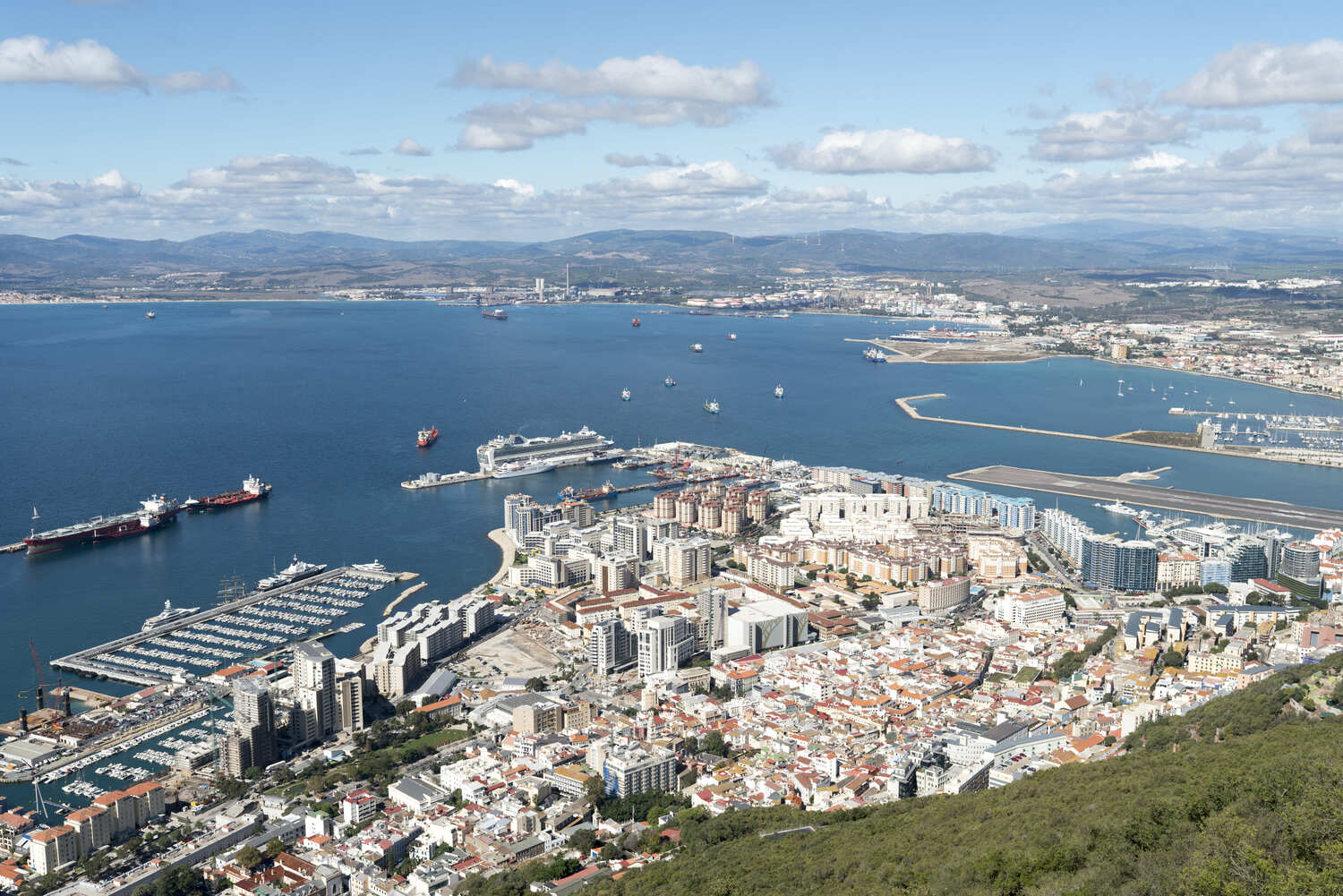
It is no coincidence that Algeciras concentrates one of the highest densities of ship repair companies on the Iberian Peninsula. Its position at the southern tip of Spain, at the exact point where the Atlantic meets the Mediterranean, makes it a mandatory stopover for thousands of vessels a year that cannot—or do not want to—divert to a major shipyard.
Natural Conditions and Geographical Position
The Bay of Algeciras offers conditions that few areas in the Western Mediterranean can match for working at anchorage:
- Sheltered Waters: Protected from the winds and currents of the Strait, allowing for safe working conditions almost all year round.
- Deep Water & Ample Anchorage: Sufficient draft and space for large-tonnage vessels.
- Immediate Proximity: Close to workshops, material suppliers, and spare parts warehouses.
- Stable Presence of Major Classification Societies: Lloyd’s Register, Bureau Veritas, DNV, American Bureau of Shipping (ABS), and ClassNK, among others.
Reference Port Infrastructure
The Port of Algeciras Bay is the leading port in Spain for container traffic and one of the main logistical hubs in the Mediterranean. This critical mass of traffic generates a robust ecosystem of maritime suppliers—spare parts supply, logistics, maritime agencies—that makes it possible to mobilize technical material in timeframes unthinkable in other ports of the region.
Furthermore, the CERNAVAL shipyard, located in Campamento (south of the Bay), features a 400-meter dry dock and a floating dock. This means that if a repair at anchorage detects damage that actually requires dry-docking, the transition to the dock can be coordinated without leaving the metropolitan area.
IN BRIEF:
- Algeciras combines a strategic geographical position, favorable natural conditions, and top-tier port infrastructure.
- The concentration of specialized companies allows for response times of 1 to 3 hours at anchorage.
- All major classification societies have an active presence in the area.
How a Repair at Anchorage Is Coordinated: A Step-by-Step Process
One of the most frequent mistakes made by superintendents contacting a ship repair company in Algeciras for the first time is not having a clear sequence of steps. Knowing the process beforehand accelerates response times and avoids misunderstandings that could delay the start of works.
The Standard Process in 6 Steps
- Breakdown Notification: The master or superintendent contacts the repair company. The more technical information provided during the initial contact—fault description, photos if possible, vessel position—the faster the response.
- Evaluation and Quotation: The company issues a proposal based on the description. For complex breakdowns, an evaluation technician may be sent first before confirming the final budget.
- Confirmation and Mobilization: Once the offer is accepted, the technical team and materials are mobilized. For anchorages within the Bay of Algeciras, the standard arrival time is 1 to 3 hours.
- Coordination with Class: If the work needs to be recorded in the vessel’s class history, the presence of the surveyor is coordinated before starting.
- Execution of Works: The team works on board in coordination with the Chief Engineer or the responsible officer using specialized mechanical services, electrical works, and certified onboard repair procedures.
- Documentation and Handover: The technical report, welding certificate (if applicable), and invoice are issued. This documentation is necessary for both the shipowner and the classification society.
Information the Repair Company Needs from the First Contact
To streamline the response as much as possible, it is advisable to have this information ready before calling:
- Vessel name, type, flag, and classification society.
- Current or expected position in the Bay of Algeciras.
- Technical description of the fault or breakdown.
- Photos or videos if possible (this greatly facilitates quoting).
- Whether the work must be supervised by Class.
- Available time window: How much time does the vessel have before departure?
IN BRIEF:
- The entire process from initial contact to the start of work can be completed in a few hours if the initial information is precise.
- Coordinating with Class before starting is key for works affecting certified systems.
- Post-work documentation is just as important as the physical intervention itself.
Frequently Asked Questions
What is ship repair at anchorage?
Ship repair at anchorage is a technical naval intervention carried out while the ship is anchored in a bay, without the need to take it to a dry dock. A team of technicians travels to the vessel via a service boat and executes the works directly on board. It is the fastest and most economical solution for breakdowns that do not require hull dry-docking.
What repairs can be done with the vessel at anchorage in Algeciras?
At anchorage in the Bay of Algeciras, works such as welding and steel repair, pipe fabrication and replacement, mechanical repairs on main and auxiliary engines, electrical works, underwater inspection by certified divers, and tank cleaning and surface treatment can be performed. Works requiring a dry dock are strictly those that extensively affect the outer hull below the waterline.
How long does it take for a ship repair team to reach the anchorage in Algeciras?
With a 24/7 operational service based out of the Port of Algeciras, standard mobilization times are 1 to 3 hours from work confirmation. Immediate mobilization is prioritized for critical emergencies.
Why is Algeciras a strategic point for ship repair?
The Strait of Gibraltar is one of the busiest shipping lanes in the world, with over 90,000 vessels a year. The Bay of Algeciras offers privileged natural conditions and the presence of all major classification societies: Lloyd’s Register, Bureau Veritas, DNV, ABS, and ClassNK.
What documentation does a vessel need to receive repairs at anchorage in Spain?
The vessel must be in good standing with the Harbour Master (Capitanía Marítima). The repair company usually handles the necessary work permits. For works certified by Class, it is necessary to coordinate the surveyor’s presence before starting.
Is it cheaper to repair a vessel at anchorage than in a dry dock?
Yes, in most cases, repair at anchorage is significantly more economical. The savings come from eliminating dry-docking fees, waiting for a slot at the shipyard, and the vessel’s off-hire days. For breakdowns that do not require access to the outer hull, anchorage is always the preferred option.
Conclusion
Ship repair at anchorage in Algeciras is the most efficient response for the majority of breakdowns in transit through the Strait of Gibraltar. It allows for rapid interventions, without the costs or waiting times of a dry dock, and with the guarantee of supervision by the main classification societies.
The three key points: anchorage is viable for most on-board technical repairs; Algeciras offers response times of 1 to 3 hours and the presence of all major Class societies; and knowing the coordination process beforehand is what makes the difference between a stop of a few hours and a delay of days.
At GTS Universal, we offer 24/7 ship repair services in the Bay of Algeciras and execute special projects tailored to complex maritime operations. Contact us, and we will provide a response in less than an hour.